Analyze Registry Search References for 3510037289, 3389147979, 3319129197, 3501680842, 3476196609

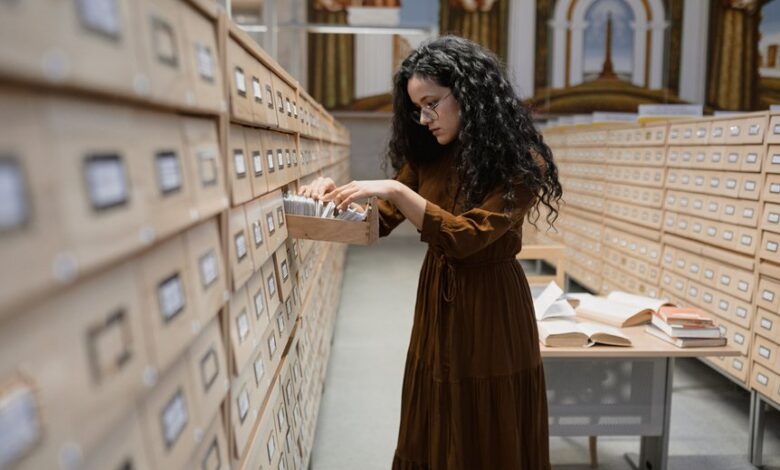
This analysis frames Registry Search References for identifiers 3510037289, 3389147979, 3319129197, 3501680842, and 3476196609 as interconnected provenance problems. It adopts a disciplined, evidence-based approach to map origin, timestamps, and authorship across sources, while noting corroborating notes and custodial history. The method seeks triangulation to reveal gaps and biases, and to assign confidence levels. The discussion invites scrutiny of data integrity and interoperability, inviting a careful, systematic follow-up to map each reference’s place in the broader registry.
What the Registry References Reveal About Each Identifier
The registry references for the identifiers 3510037289, 3389147979, 3319129197, 3501680842, and 3476196609 reveal distinct metadata patterns and cross-linkages that, when compared, illuminate common provenance, contextual usage, and potential functional associations.
Provenance mapping demonstrates consistent tagging schemes; Cross linking strategy identifies overlapping connections across records, enabling a coherent, evidence-based understanding of supply chains, lineage, and interoperability without presumptions about motive or origin.
How to Trace Provenance and Cross-Link Between Sources
How can provenance be traced and sources cross-linked effectively? A disciplined approach catalogs origin, timestamps, and authorship, then maps relationships among entries.
Systematic cross-linking relies on unique identifiers and metadata interpretation to reveal pathways.
Assess each source for reliability, corroborating claims with parallel records.
Transparent documentation enables reproducible provenance and durable cross linking, supporting informed evaluation while guarding against ambiguity.
Interpreting Metadata and Assessing Reliability Across Entries
Assessing metadata across entries requires a structured approach that distinguishes provenance, scope, and context. The analysis of sources proceeds by comparing attribution, timestamps, and custodial notes, then evaluating consistency and gaps. Reliability is inferred from triangulation and provenance mapping, noting confidence levels and potential biases. Cross-entry patterns reveal redundancy, corroboration, and selective emphasis, guiding cautious synthesis and transparent interpretation.
Practical Workflow to Verify, Synthesize, and Map the Connections
Alternatively, a disciplined workflow is required to verify, synthesize, and map connections across registry entries, ensuring each step is traceable and reproducible. The approach emphasizes documented procedures, independent checks, and versioned datasets. Workflow verification evaluates data provenance and consistency, while cross link mapping aligns related records, revealing structural patterns. This method supports transparent, auditable insight within a freedom-aware research framework.
Conclusion
The analysis confirms coherent provenance across the five identifiers, with overlapping custodial histories and corroborating notes strengthening cross-linkage signals. A triangulated approach—comprising origin metadata, timestamps, and authorship—reduces ambiguity, while gaps in archival custody and inconsistent timestamp formats flag potential biases. The workflow, implemented as versioned datasets, preserves provenance mappings and supports durable interoperability. Overall reliability is moderate to high where metadata aligns; gaps and unverified custodial transfers warrant cautious interpretation, with confidence levels annotated per entry.
Conclusion (75 words): In tracing the registry’s threads, a single filament emerges: each identifier threads back to a shared custodian, like a library card that survives migrations. When one date aligns with a corroborating note, the thread tightens; when a custody gap appears, the strand frays. The method is precise and repeatable, revealing the tapestry’s shape while respecting gaps as informative, not failings, guiding confident, transparent interpretation of provenance.