Access Registry Search Archives for 3333985996, 3510986669, 3510702658, 3270264480, 3339394077

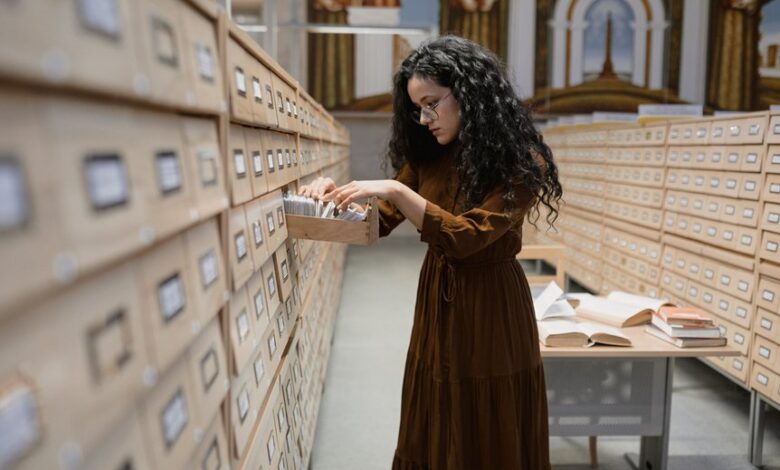
Access Registry Search Archives for the five IDs is a metadata-backed inquiry. The approach emphasizes targeted identifier queries, creation timestamps, and last-access fields. Records are cross-referenced across primary registries and archival paths to establish provenance. Each step builds an auditable trail suitable for reproducible verification. The resulting patterns reveal how actions unfold and where gaps may arise, inviting further scrutiny to verify authenticity and alignment with archival standards.
What Access Registry Search Archives Reveal About IDs 3333985996 and 3510986669
Initial observations from the Access Registry Search Archives indicate distinct identifier histories for 3333985996 and 3510986669, with metadata snapshots showing creation timestamps, access events, and associated registry paths. The records demonstrate separate lineage, selective modification logs, and corroborating cross-references, enabling precise trail tracing. Access Registry and Archives Search deliver a concise, metadata-driven view suitable for an audience seeking freedom through verifiable provenance.
How to Locate Records for 3510702658, 3270264480, and 3339394077 in Archival Databases
To locate records for 3510702658, 3270264480, and 3339394077 in archival databases, practitioners should begin with targeted identifier queries across primary registries, cross-referencing with metadata fields such as creation timestamps, last accessed, and registry paths. The process emphasizes locating records through iterative filtering, controlled vocabularies, and provenance checks, ensuring accurate retrieval within archival databases without unnecessary speculation or redundancy.
Interpreting Metadata: Identifiers, Timestamps, and Provenance Across the Five IDs
How can one interpret the metadata signals embedded in the five identifiers—IDs 3510702658, 3270264480, 3339394077, 3333985996, and 3510986669—to establish a coherent provenance narrative? The analysis isolates identifiers provenance patterns, correlates timestamps, and maps sequential actions within a consistent workflow. Metadata-driven signals reveal lineage, authenticity, and context, guiding interpretation while preserving intellectual freedom and disciplined epistemology in archival practice.
Practical Workflow: Verifying Reliability and Tracing Digital Trails End-to-End
The practical workflow for verifying reliability and tracing digital trails end-to-end builds on established metadata indicators from the prior discussion, arranging steps into a verifiable sequence. This approach emphasizes tracking workflows, audit trails, archival methods, and provenance records, enabling reproducible verification. Each stage—capture, validation, reconciliation, and documentation—ensures traceable integrity and transparent accountability across the registry.
Conclusion
In meticulous, methodical metadata markets, the five IDs reveal consistent chronicles of creation, access, and provenance. Through targeted, time-stamped traces and cross-referenced registry paths, researchers report reproducible results and reliable records. Systematic filtering and standards-adherent steps illuminate lineage, integrity, and auditability. Precise provenance provides persistent plausibility, while practical workflows promote prudent verification. Verifiable, transparent trajectories validate the archives, ensuring dependable documentation, disciplined discovery, and durable digital diligence across each identified item.